

FG Calls for Climate Adaptation to Break Conflict Cycle in Fragile States
The Federal Government has called for the integration of climate adaptation into peacebuilding efforts in fragile states, noting that its exclusion will lead to prolonged insecurity and instability.
Declaring open the Peer Learning Forum on National Adaptation Plan (NAP) Processes in Conflict-Affected Countries_ on Monday in Abuja, the Permanent Secretary, Federal Ministry of Environment, Salihu Usman stated that “It would be a mistake to ignore medium- and long-term adaptation needs in these peacebuilding contexts,” adding that Conflict-affected states need to adapt to the impacts of climate change.
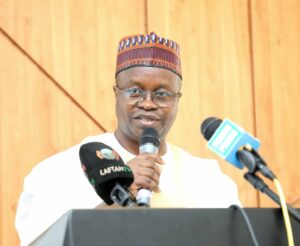
The three-day forum, running from May 5–7, 2026, co-hosted with the NAP Global Network, brings together policymakers and experts from Burkina Faso, Cameroon, the Central African Republic, Chad, Liberia, Mali, Somalia, and South Sudan to share knowledge on implementing adaptation strategies in fragile settings.
Usman linked rising insecurity in Nigeria to climate change, citing farmer-herder conflicts, cattle rustling, and banditry as threats worsened by rising temperatures, erratic rainfall, and environmental degradation.
“While climate change and conflict often compound each other, adaptation can help break the cycle by improving social well-being and addressing the root drivers of fragility,” he said.
The Permanent Secretary stressed that adaptation must be implemented _“through the lens of conflict sensitivity”_ since Nigeria’s NAP implementation will extend to conflict-prone areas.
He disclosed that Nigeria’s NAP, supported by the Green Climate Fund, is in its final stage following a participatory and transparent validation process.
According to him, a key input was the nationwide Climate Risk and Vulnerability Assessment, which identified community vulnerabilities and adaptation options.
Usman noted that under its updated Nationally Determined Contribution 3.0, Nigeria has committed to a 47% reduction in greenhouse gas emissions with international support, while advancing adaptation measures aligned with the NAP.
He reaffirmed Nigeria’s commitment to global climate obligations under the UN Framework Convention on Climate Change, the Kyoto Protocol, and the Paris Agreement.
Usman commended President Bola Ahmed Tinubu and Minister of Environment Mallam Balarabe Abbas Lawal for their leadership, and acknowledged the Department of Climate Change for organizing the event.
The Permanent Secretary welcomed international participants and urged them to contribute meaningfully _“in our march toward a cleaner, healthier, and safer environment.”_
Earlier, Director, Department of Climate Change, Dr. (Mrs) Iniobong Abiola-Awe, said extreme weather events and climate variability are already impacting key sectors, infrastructure, and biodiversity in Nigeria, with effects _“projected to become even more severe under future climate change scenarios.”_

She stressed that while mitigation efforts continue, adaptation remains critical to adjust systems and operations _“without affecting our daily activities nor jeopardizing our security.”_
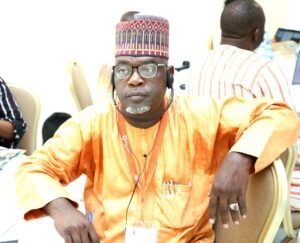
Dr. Abiola-Awe added that Nigeria’s NAP was developed through a fully inclusive and transparent process that embeds peacebuilding considerations into both planning and implementation, and urged that conflict-sensitivity be factored into adaptation and development plans at all levels.
Also addressing participants, Alec Crawford, Director of Nature for Resilience at the International Institute for Sustainable Development, (IISD) which hosts the NAP Global Network, said the link between climate risks, war and conflict is no longer abstract.
He noted that in conflict-affected contexts, adaptation competes with urgent priorities for _“funding, attention and political capital,”_ and requires coordination across parts of government that do not always work closely together.
Crawford explained that the NAP Global Network has supported Nigeria and the Central African Republic to integrate conflict sensitivity into climate risk assessments by examining how climate risks interact with local tensions, displacement patterns, and resource access. _“Adaptation in fragile contexts is not a secondary issue — climate resilience is central to development trajectories,”_ he said.
He thanked the Government of Ireland for providing financial support through Irish Aid that made the event possible, and stressed that the forum aims to have an honest discussion about where processes have stalled and trade-offs have been difficult.
The forum aims to foster cross-country learning on how to embed conflict sensitivity into National Adaptation Plan processes, address the intersection of climate risks and fragility, and produce actionable recommendations that support long-term resilience in vulnerable communities.

