

RAAMP Holds 2-Day Road Safety Awareness Campaign in Sokoto to Promote Safer Rural Roads
The Rural Access and Agricultural Marketing Project (RAAMP) has reaffirmed its commitment to safer rural transportation through a two-day Road Safety Awareness Raising Campaign held in Sokoto State from July 6–7, 2026
The campaign brought together engineers, government officials, road safety professionals, transport operators, and community members to promote a proactive approach to road safety, emphasizing prevention over reaction.
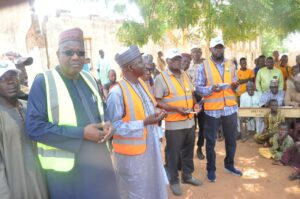
The event was attended by the *Special Adviser to the Executive Governor on Rural Roads*, the *Director General of the Rural Roads Agency (RARA)*, representatives from *Kebbi State*, the *Federal Project Management Unit (FPMU)*, and other key stakeholders, highlighting the shared responsibility for creating and maintaining safer roads across rural communities.
Opening the campaign, *RAAMP’s Rural Road Safety Consultant, Engr. Okwudili Ikejiani*, delivered a technical presentation on the importance of road safety audits.
He explained that road safety audits are systematic assessments conducted throughout a road project’s lifecycle — from planning and design to construction and operation — to identify and eliminate potential safety risks before they result in crashes.
Engr. Ikejiani emphasized that integrating safety measures at the earliest stages of road design is both more effective and more cost-efficient than addressing hazards after construction.
Highlighting the global and national road safety challenge, he noted that approximately *1.19 million people lose their lives annually in road crashes worldwide*, while road traffic injuries remain the leading cause of death among young people aged *5 to 29 years*.
In Nigeria, according to the *Federal Road Safety Corps (FRSC)*, *6,858 road crashes* recorded between January and September 2025 resulted in *3,433 deaths and 22,162 injuries*, with incidents in rural areas believed to be significantly underreported.
He further stressed that achieving safer roads requires close collaboration between engineers, road safety professionals, government agencies, and local communities. Potential hazards — including poor road geometry, inadequate signage, insufficient pedestrian facilities, and the needs of vulnerable road users — must be identified and addressed from the earliest stages of project development.
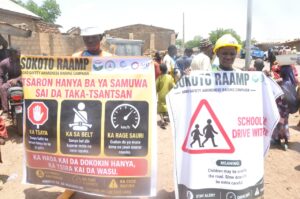
The second day of the campaign extended the message beyond the conference room into communities along the *Malikawa–Buzulega–Yar Gada–Lukuwa (13km) RAAMP road corridor*.
At *Yar-Gada Model Primary School*, officials from the Federal Road Safety Corps (FRSC) engaged pupils in interactive road safety education sessions designed to instill safe8 road-use habits from an early age.
In a statement signed by Vivian Amadi, Head of RAAMP’s Development Communications Unit, the children were taught practical lessons on road awareness, personal responsibility, and safe behaviour around roads, reinforcing the importance of nurturing a culture of safety among future generations.
The campaign also reached transport stakeholders at a local bus park, where drivers, commuters, traders, and transport operators received road safety sensitization. These engagements encouraged safer driving practices, increased awareness of shared road responsibilities, and promoted behavioural change among those who use the roads daily.
Speaking on the significance of the campaign, RAAMP reiterated that while quality infrastructure is essential for improving rural access and connectivity, roads alone cannot guarantee safety. Safe road use depends equally on responsible human behaviour, effective road design, continuous public education, and strong collaboration among all stakeholders.
As RAAMP continues to expand rural access across Nigeria, road safety remains an integral component of its development strategy. By embedding safety considerations into every phase of project planning, implementation, and community engagement, the project is ensuring that improved rural roads not only connect communities and markets but also protect lives and contribute to safer, more resilient communities for generations to come.

